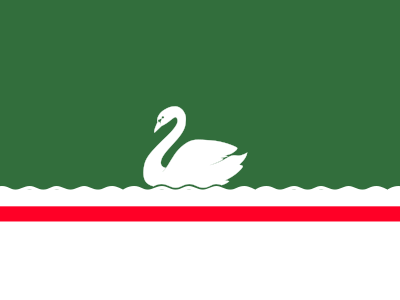
| Morocos Republic | |
|---|---|
| Island of Santo Antão | |
| Constituent Republic of Vekllei | |
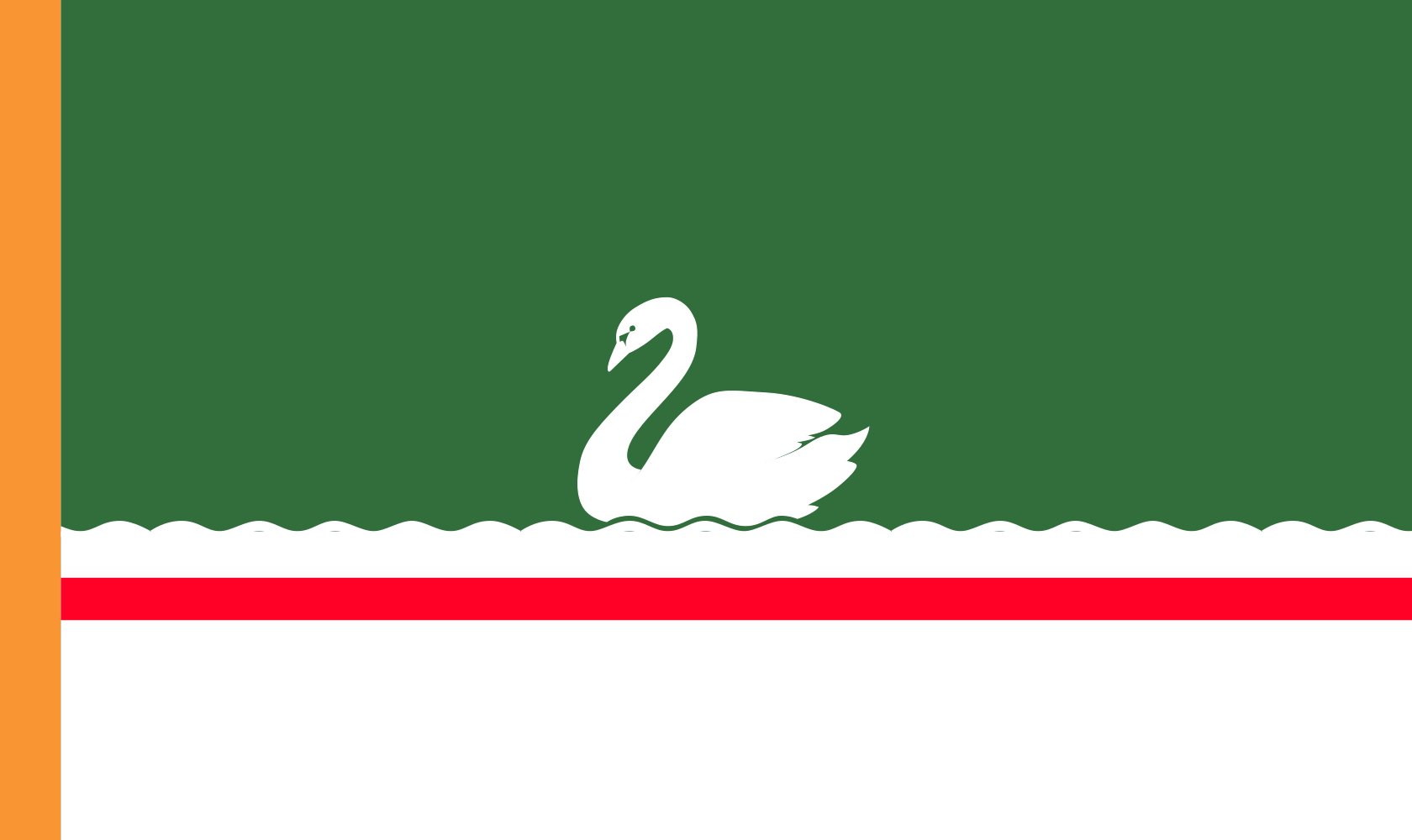 |
|
| Part of the Verde Commonwealth | |
| Accession | 1945, as part of the British Atlantic Territories |
| Area | 785 km² |
| Capital | Novo |
| Languages | English, Verde Creole, Portuguese |
| Population | 162,337 |
The Morocos Republic is a constituent republic of Vekllei at the northwestern end of the Cabo Verde archipelago, and the largest island in the group. Mountains run through the centre of the island and reach close to 2,000 metres, dropping into steep gorges known locally as ribeiras, and some villages at the bottom of these gorges get only a few hours of direct sun in winter. The capital, Novo, sits on the dry south coast and began as a coaling stop with a customs shed attached. Most of the population lives in the ribeiras of the northeast, where the mountains catch the trade winds and the terraces grow coffee, sugarcane and banana down almost to the water.
Each ribeira has its own microclimate and its own crops. The villages along the valley floors and terraces are connected by paths cut into the cliffs and footbridges across the gorges, a vertiginous way to get around that has made the walking here some of the best-known in Verde. About a fifth of all coffee grown in Verde comes from these terraces. Most of it is handled by the Ribeira Grande Cooperative, which runs a roasting and grading plant at Ponta do Sol and ships the crop on to Novo for export through the Bureau of Trade’s regional office. The cane goes mostly into grogue, the local cane spirit, and almost every ribeira household keeps a still of some kind.
Novo is windswept and not especially attractive, and most visitors only pass through it on their way to the mountains. It has ferry connections to Viana and the rest of the archipelago, a small airport with Commonwealth services on the flatter ground west of town, and a port handling coffee, fish and timber exports along with fuel and machinery imports. Two narrow-gauge railways run inland from Novo, the Ribeira Grande Line and the older Paul Line, both built under the British Atlantic Territories to bring plantation produce down to the coast. They now carry mostly passengers, including workers and schoolchildren travelling between the valley towns and the railheads. Above the railheads, mule tracks remain the only way in or out. The Bureau of Public Works has had a plan since the 1990s to extend the Ribeira Grande Line further up-valley, but it has never been fully funded.
The island lost much of its population to emigration during the twentieth century, mostly to the United States, Portugal and the Netherlands. The population has been recovering since federalisation but remains below its 1950s peak. New arrivals have come from other Verde islands and elsewhere in the Commonwealth, settling mainly in Novo and the larger valley towns, particularly the market town of Ribeira Grande. Some smallholdings abandoned by earlier generations have come back into cultivation, in places under commons arrangements rather than the old family-plot system.
Climate
The northeast valleys catch the trade winds and stay cool and damp from November to March, when the upper terraces can go for days without sun. The rest of the year is drier but still green by Cabo Verde standards. Novo and the west coast are hot and dry year-round, and the peaks can be cold, even frosty, at any time of year.
Public Holidays
- New Year’s Day 1 Jan
- Heroes Day 20 Jan
- Republic Day 17 Apr
- Good Friday
- Commonwealth Day 1 May
- St. John’s Day 24 Jun
- Festa do Grogue Late Jul
- Assumption Day 15 Aug
- All Saints Day 1 Nov
- Christmas Day 25 Dec
- Butter
- Electronic Components
- Fish
- Flour
- Glass
- Grain
- Lubricants
- Molasses
- Palm Oil
- Paper
- Petroleum
- Salt
- Sugar
- Timber
- Cova de Paul (crater gardens on the central plateau)
- Ribeira Grande Valley (terraced agriculture and the main valley market town)
- Ponta do Sol (cliffside village at the mouth of Ribeira Grande)
- Corvo Coastal Trail
- Ribeira Grande Cooperative roasting plant
- Paul Line railhead
- Novo Port
- Morocos Sugar Company Mountain irrigation and cane terrace operations on the slopes of Monte Gordo.
- Valley Railway Company Scenic regional railway serving the lush valleys of Santo Antão.
- Sol Mountain Express High-altitude rail service serving the mountain peaks of Morocos.
- Naval Station Morocos Naval Station Morocos is a naval station of the Vekllei Armed Forces, located in the republic of Morocos.