
Fogo is a constituent republic of Verde Commonwealth.
| Fogo Republic | |
|---|---|
| Island of Fogo | |
| Constituent Republic of Vekllei | |
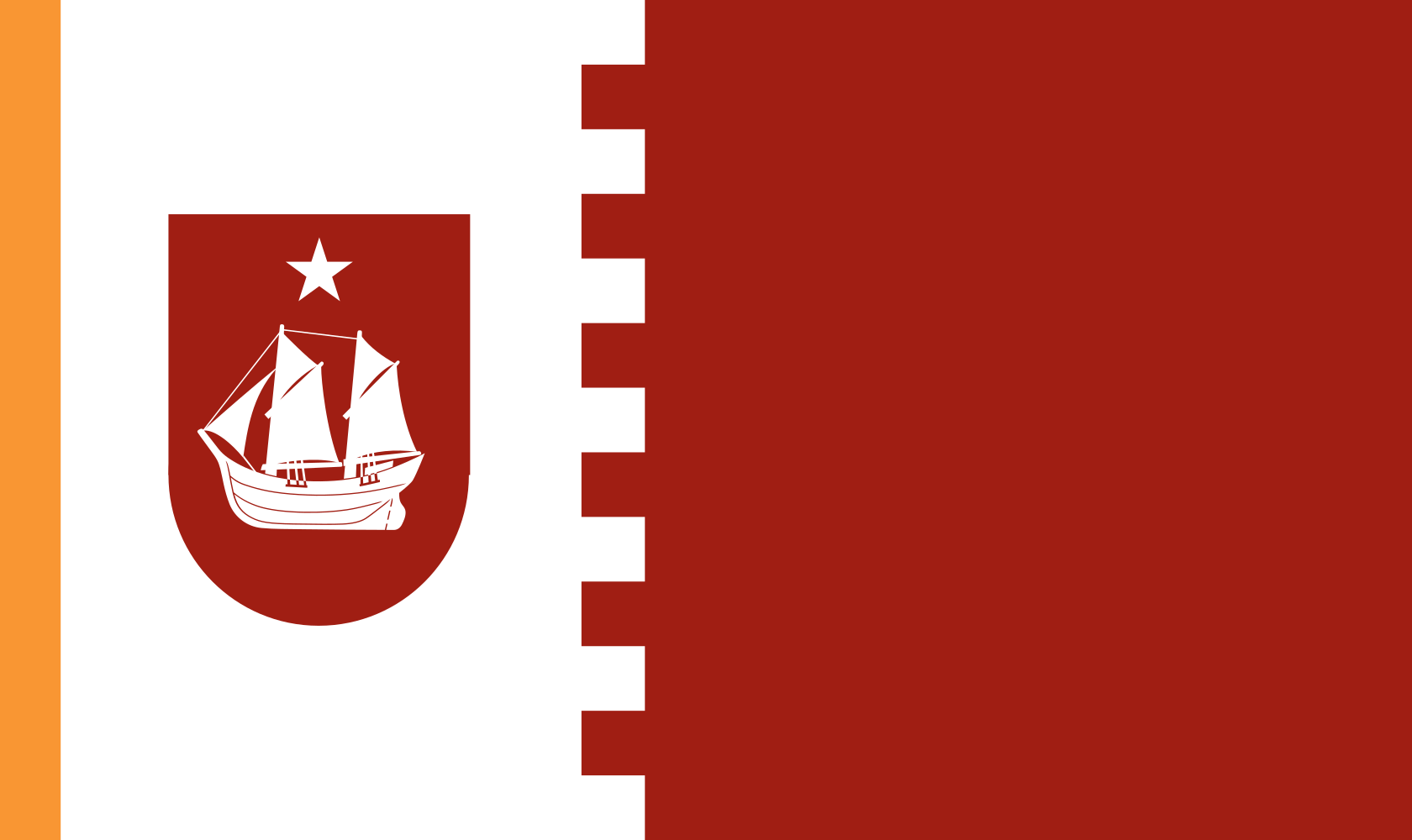 |
|
| Part of the Verde Commonwealth | |
| Accession | 1945, as part of the British Atlantic Territories |
| Area | 476 km² |
| Capital | Filipe |
| Languages | English, Verde Creole, Portuguese |
| Population | 48,852 |
The Fogo Republic is a constituent republic of Vekllei in the southern Barlavento islands of the Cabo Verde archipelago. It is dominated entirely by the Pico do Fogo, an active stratovolcano rising 2,829 metres from sea level that constitutes most of the island’s physical mass. The surrounding slope is Fogo; the volcano is the island.
Pico do Fogo last erupted in 2032, and before that in 1995. The pattern continues at irregular intervals. The eruption of 2032 lasted twelve months and destroyed most of the village of Portela inside the crater, burying it under basalt lava. The village had been rebuilt after the 1995 eruption, and again after 2032. This is the third time in a century that Portela’s residents have returned to reconstruct homes inside the active caldera of a volcano that destroyed them, but the decision to relocate is ultimately theirs.
The caldera soil, enriched by centuries of eruption and the mineral richness of fresh volcanic rock, is among the most fertile in the Verde archipelago. The Cha das Caldeiras coffee grown inside the crater is exceptional and among the finest coffee varieties in the country. It is dense, fruity and slightly smoky, and has been exported to discerning buyers in Iberia and the wider Commonwealth for generations. The wine grown on the caldera slopes is equally distinctive, dark red and mineral. Fogo has a developed culinary tradition as a result.
Filipe, the island’s capital, sits on the southwest coast at the base of the volcano’s longer slope. It is a modest city with a colonial administrative centre circled by new development on its fringes. It has baroque churches and a port capable of handling cargo vessels. From its streets, the Pico dominates the sky. On clear nights, the faint glow of residual volcanic activity is visible from the harbour.
Climate
Cooler and wetter than other Verde islands due to altitude. The caldera interior is cool and receives significant moisture from cloud cover. The coast is hot and dry. A constant risk of eruption risk remains.
Public Holidays
- New Year’s Day 1 Jan
- Heroes Day 20 Jan
- Republic Day 9 Mar
- Good Friday
- Commonwealth Day 1 May
- Assumption Day 15 Aug
- All Saints Day 1 Nov
- Christmas Day 25 Dec
- Butter
- Electronic Components
- Fish
- Flour
- Glass
- Grain
- Lubricants
- Palm Oil
- Paper
- Petroleum
- Salt
- Sugar
- Timber
- Pico do Fogo Summit: Active volcanic cone, accessible by a demanding climb, with views across to [[Brava]] and on clear days to [[Praia]].
- Chã das Caldeiras: Settlement inside the volcanic caldera, source of the island’s famous coffee and wine, rebuilt multiple times after eruptions.
- 1995 Lava Fields: Solidified basalt from the most recent major eruption, covering parts of the caldera floor and the former village of Portela.
- Filipe Colonial Quarter: Well-preserved colonial centre with baroque church and the island’s principal government buildings.
- Fogo Crater Lodge Atlantic Hotel 30
- Fogo Republic Cane Company Caribbea Cane 900
- Airlink Fogo Marine Station Commonwealth Airways 35
- Fogo Crater Railway CommRail 278