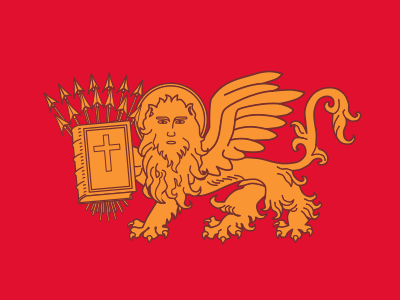
| Yabaque Republic | |
|---|---|
| Acklins and Crooked Islands | |
| Constituent Republic of Vekllei | |
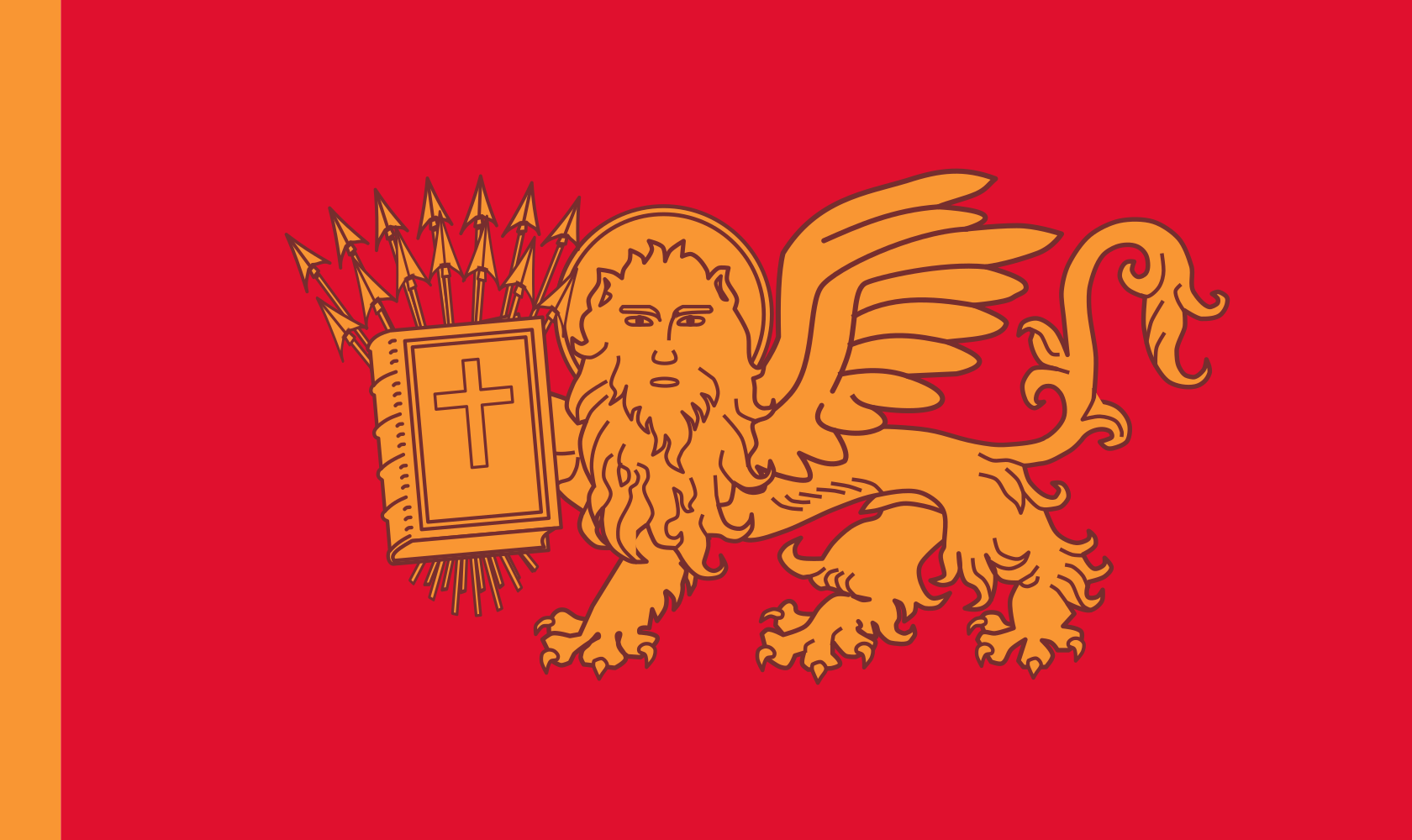 |
|
| Part of the Lucaya Commonwealth | |
| Accession | 1930, as part of the Alford Agreement |
| Area | 537 km² |
| Capital | Spring Point |
| Languages | English, Bahamian Creole |
| Population | 14,686 |
The Yabaque Republic is a constituent republic of Vekllei in the Atlantic, made up of Acklins Island, Crooked Island and the smaller Samana and Plana Cays at the southeastern end of the Lucayan Archipelago. The two main islands enclose the Bight of Acklins, a broad shallow lagoon, and the terrain is the low limestone and white beach typical of the Lucayas, with a number of inland salinas dating from a salt trade that has since died out.
The first settlers of any number were loyalists who arrived after the American Revolution and attempted to grow cotton on the islands’ poor soils, with little success. Within a generation or two most of the cotton estates had failed, leaving behind a population of fishermen and subsistence farmers dependent on the lagoon and the salinas. The islands lost population steadily through the 19th and early 20th centuries as younger residents left for Nassau and elsewhere.
This decline was reversed after the republic’s accession to the Commonwealth, when sailors, marine pilots and flight instructors began settling in the Bight area, drawn by its calm water and seclusion. The Commonwealth Marine Aviation School now operates its main Caribbean facility from Spring Point, where flying-boat crews carry out practical training on the Bight.
The Plana Cays host a tracking station operated by ASRE, used to monitor spacecraft and satellites passing over the Caribbean; the islands’ isolation and clear skies make them well suited to the work. A small number of technicians and their families are based there permanently, with supplies delivered by air once a week. The station also functions as a weather post, and its hurricane reports are distributed throughout Lucaya.
Most of the republic’s population lives on Acklins, in settlements along a coastal road and tramway on the western shore. The capital, Spring Point, has developed largely around the aviation school, with student accommodation, boat repair workshops and a hospital specialising in diving medicine. Pinefield, further north, is the centre of what agriculture remains, its greenhouses kept closed against salt spray off the sea. The eastern coast of Acklins is sparsely settled, with a few fishing camps and isolated households.
Crooked Island, across the harbour from Acklins, has retained more of its earlier character. Colonel Hill has a number of buildings surviving from the loyalist period, and the island maintains traditions of boatbuilding and sailmaking, with apprentices sent from elsewhere in the Commonwealth to learn trades that are otherwise disappearing – skills still needed to maintain Vekllei’s wooden sailing fleet. The LSRE also runs a sea turtle monitoring programme on the island, recording nesting sites and threats to them.
A disproportionate number of the Vekllei fleet’s seaplane pilots and navigators come from Yabaque, many having grown up navigating the Bight’s sandbanks and tides, and it is common for families here to have several generations in maritime or aviation careers.
Transport within the republic depends heavily on boats. The Bight is sheltered enough for small craft to move between the islands in most weather, and a ferry service connects the main settlements, with mail boats serving the more remote homesteads. Spring Point has a small airport with flights to Nassau and other republics of Lucaya, and a rail line runs north along Acklins’ western coast from Spring Point, used mainly to carry students and supplies to the aviation school.
Local English has a distinct Lucayan accent, and Yabaquans have a reputation for being reserved, which residents attribute to the isolation and the demands of working on the water. Rake-and-scrape music and older storytelling traditions remain in use. Much of social life centres on the churches and the aviation school, and the republic is sometimes regarded as a place to retreat to by those unsuited to the pace of the larger Commonwealth islands.
Climate
Subtropical and dry, with less rainfall than northern Lucayan islands. The exposed position and constant trade winds create challenging conditions for agriculture but ideal weather for maritime training.
Public Holidays
- New Year’s Day 1 Jan
- Spring Carnival
- Good Friday
- Easter Monday
- Whit Monday
- Commonwealth Day 1 May
- Republic Day 10 Jul
- Emancipation Day 1 Aug
- Independence Day 10 Oct
- Christmas Day 25 Dec
- Boxing Day 26 Dec
- Chemicals
- Electronic Components
- Glass
- Herbs
- Plastics
- Rare Earths
- Timber
- Plana Cays Tracking Station ( ASRE)
- Colonel Hill, Crooked Island – loyalist-era buildings and boatbuilding apprenticeships
- The Bight of Acklins
- Spring Point Oceanic Medicine Centre
- Castle Island Lighthouse, southern tip of Acklins
- Commonwealth Marine Aviation School Pilot training school for amphibious aircraft and flying boats, offering practical instruction in the protected waters of the Bight of Acklins..
- Spring Point Railway Regional rail service serving the island of Yabaque.
- Acklins Farm School Urban gardening, hydroponics and remote medicine specialist.
- Pinefield Agricultural Station Experimental greenhouse farms developing salt-tolerant crop varieties.
- Turtle Science Station Research station on Crooked Island tracking sea turtle nesting patterns.