Part of the country series of articles.
TRAVEL ADVISORY: NORMAL PRECAUTIONSThe Commonwealth advises travellers to exercise normal precautions when travelling in this country. Travellers should familiarise themselves with local laws and customs and consular availability.
| United Republic of Tanganyika | |
|---|---|
| Socialist Republic | |
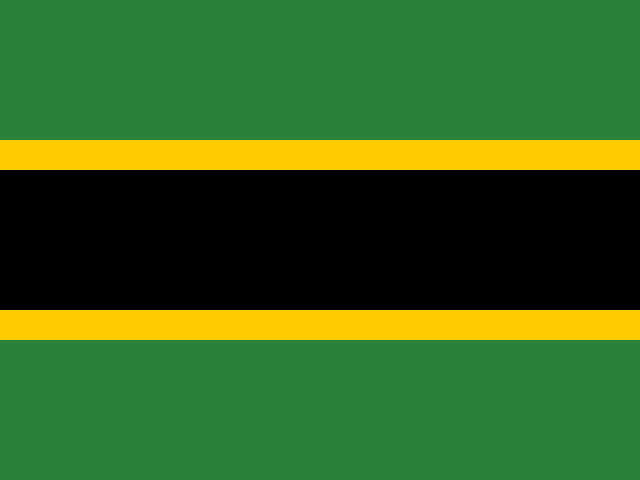 |
|
| Capital | Dodoma |
| Languages | Swahili, English, and many regional languages |
| Population | 28,400,000 |
The United Republic of Tanganyika is a socialist republic in East Africa, among the most politically stable countries of sub-Saharan Africa and one of the most prosperous in the region. Its national ideology is Ujamaa, articulated by Julius Nyerere and combining village socialism, African communalism and a Christian ethic of service and shared obligation. Ujamaa has evolved substantially since the 1960s and Nyerere’s successors have taken a more pragmatic approach to economic management, but the ideology remains the formal basis of rural organisation and has shaped the country’s emphasis on universal education and civic participation.
Dodoma and Dar es Salaam have grown into substantial cities with professional classes working across finance, government and the service sector. The village cooperatives that form the backbone of Ujamaa policy continue to produce most of the country’s food, and the church remains the centre of social life in much of the rural interior. The tension between the communalist founding ideology and the expectations of an educated urban population has come to define political debate in the current era, with the government managing competing pressures from the rural cooperative sector and from urban professionals seeking a more liberalised economy.